

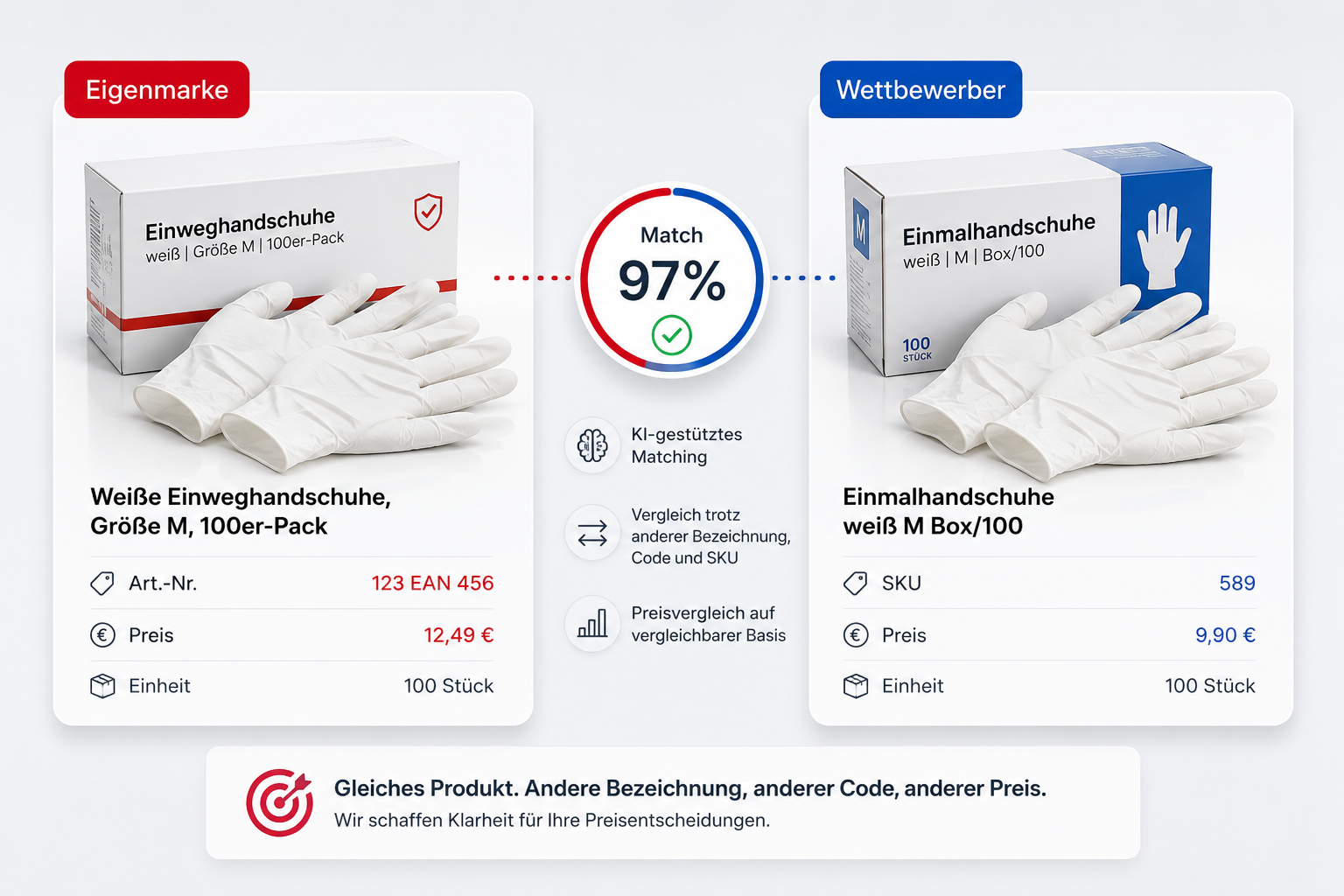
Every merchant watches the competition. But anyone working without structured private-label matching works with samples, manual spreadsheets or the gut feel of an experienced colleague. On private labels, however, there is simply no reliable price information.
They cannot be mapped by code matching. Anyone who still wants to compare them cleanly with competitor products needs a different approach.
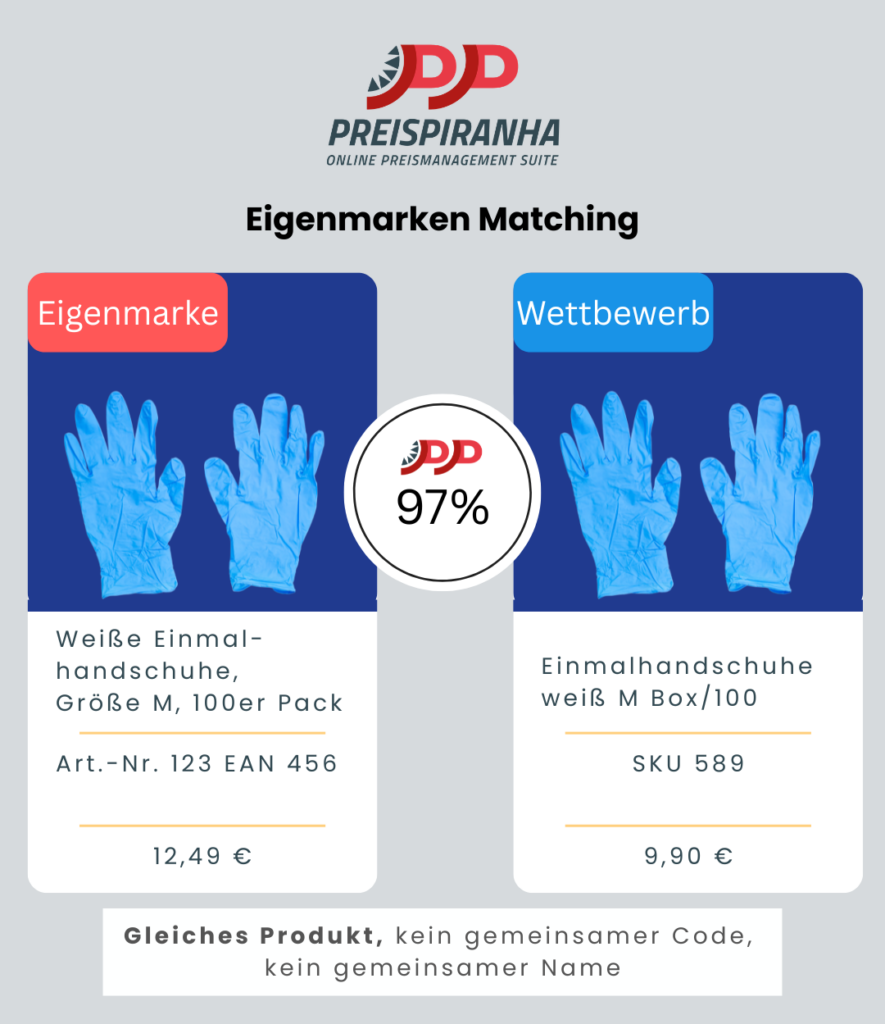
A practical example:
Your private label is called “White disposable gloves, size M, pack of 100”.
At the competitor the same product is called “Disposable gloves white M box/100”.
No shared code, no shared name — still the same product.
When the price comparison lies
Pricing decisions on the wrong basis. You cut a price because you think you are more expensive than the competition — but the comparison was wrong. Different format, different quality. Margin is gone, for no good reason.
New products with no market reference. No historic price, no comparison basis. The price is based on internal costs, not the market. That costs either margin or volume.
Outdated data. Marketplaces change every day. Anyone who does not crawl and match continuously is deciding with outdated maps.
Private-label matching pricing strategy: an end to samples and gut feel
The PreisPiranha suite crawls all marketplaces and webshops, regardless of industry. The matching module also works where classic code comparisons fail:
- AI-assisted matching for private labels — based on name, brand, format, volume and category, condensed into a similarity score
- Conversion factor for different pack sizes and units of measure
- Manual matching as a check in sensitive cases
- Integration of all data sources — web, panel, internal systems
Less guessing, more deciding
Marketing knows where private labels stand against the competition and can build communication on that.
Sales argues with evidence-based price advantages instead of gut feel.
Management takes pricing decisions based on market data, not assumptions.
Private-label matching is not a nice-to-have. It is the prerequisite for your pricing strategy to work in the most important part of your range.
Want to understand which data and rules you need for successful matching?
In our blog article “How to prepare your private-label matching” we explain step by step how a matching project is set up in practice.